Carbon Monoxide Research Analytics Report
This report introduces COPE, the CORA platform, its users, key insights to date and future data, and the data-led demonstrators being delivered.
Download the CORA Report




The Carbon Monoxide Partner Ecosystem (COPE) is a collaborative project working to reduce the risks of carbon monoxide (CO) in homes across the UK. It brings together organisations across housing, fuel, government, Fire and Rescue Services, health, CO alarm and gas detection industries and charities, to improve how carbon monoxide incidents are understood, prevented, and responded to.
Established in 2023 by Cadent in partnership with Sia, COPE is now co-delivered by Cadent, Northern Gas Networks, and SGN, with support from Wales and West Utilities and a growing network of partners.
Develop a data-driven understanding of the true prevalence of CO poisoning from gas and solid fuel within domestic dwellings (including non-typical and unregulated dwellings of all tenure types), and the corresponding impact to society.
Data on CO incidents is siloed and held by different organisations. This makes it difficult to understand the true prevalence of CO and how big the problem is. COPE addresses this challenge by connecting data across sectors to create a complete and more accurate picture of CO risk.
COPE has delivered practical tools and insights to support better CO prevention and protection.
A central outcome of COPE is the development of the Carbon Monoxide Research and Analytics (CORA) platform, the UK’s first platform to bring together carbon monoxide data from multiple sectors.
CORA combines more than 40 datasets from gas, fire, housing, health, and CO alarm providers to build a clearer picture of:
By turning complex data into clear insight, CORA helps organisations take more targeted and effective action.
Watch the video to see how the CORA platform supports better carbon monoxide prevention through shared data and insight.
Various insights can be obtained from CORA. Analysis of its data highlights important patterns, such as:
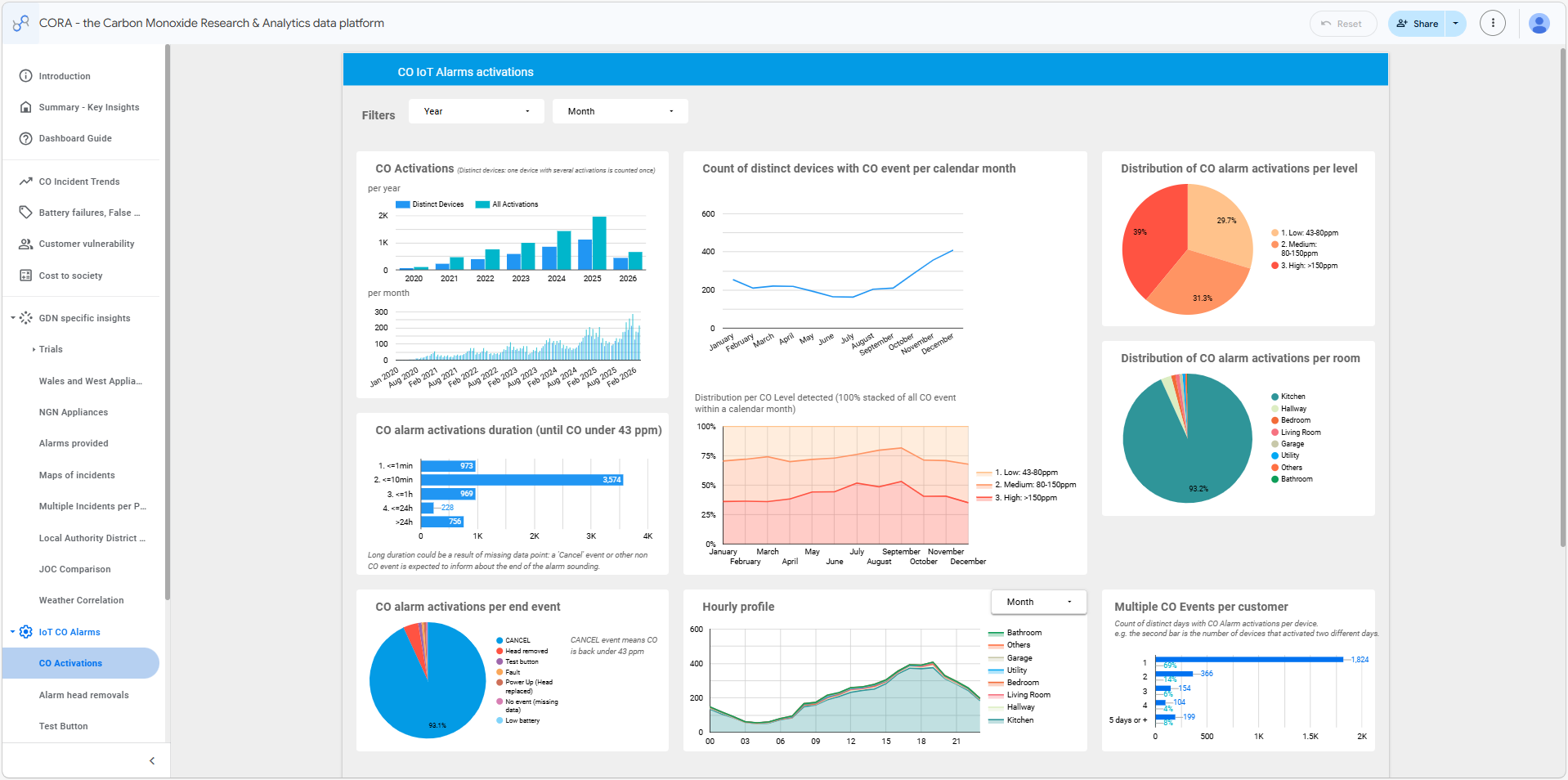
Data taken from the CORA platform showing households having multiple CO incidents.


Insights from CORA are used to design and test practical interventions that reduce carbon monoxide risk. The two core demonstrators are introduced below:
Data from CORA highlighted risky behaviours such as CO alarm removal and delayed reporting of incidents. In response, Cadent, NGN, and SGN, working with housing providers and manufacturers, are trialling smart (IoT) CO alarms in vulnerable homes.
These alarms send alerts remotely, allowing faster action and better protection. Over 200 devices have already been installed, providing valuable insight into CO exposure as well as indicators linked to damp and mould.
CORA also revealed differences in how CO incidents are recorded by different organisations. To address this, the gas distribution networks have developed a more consistent approach to incident reporting, improving data quality and shared learning across the sector.
The partnership continues to grow as new organisations join through demonstrator projects and data-sharing initiatives. As of 2026, the following stakeholders are involved in COPE:







If you have any CO data that could be valuable for this project or would like any further information, please contact [email protected].

Ask Hugo
Your virtual assistant for gas network queries on Cadent AI-powered by Cadent